Cataracts are the leading cause of reversible vision impairment worldwide.
Cataracts occur when the natural lens in the eye becomes cloudy causing symptoms such as blurry vision, issues with glare and noticeable changes in colours. Other symptoms may include issues with reading in dim light, frequent changes in glasses prescription and double vision.
Most cataracts develop gradually with age. It is possible for patients to have had cataracts for many years before they notice an impact to their vision. However, particular risk factors that can cause cataracts to progress more rapidly include; genetics, excessive UV exposure, ocular trauma, smoking, long-term use of corticosteroids and some systemic conditions such as diabetes.
At iSight Specialists we are able to assess your cataracts and their level of impact to your vision. At your appointment, we will conduct measurements of your eyes as well as a thorough ocular assessment including dilating your pupils to determine your suitability for cataract surgery. If there is not a significant impact to your vision due to cataract, your eyes may be monitored every 6-12 months instead of opting for surgery straight away. Once, your vision is impacted where it interferes with daily activities and glasses no longer improve your vision adequately, surgery will be the best option. The decision to monitor or to have surgery will be made in discussion with Dr Taranath. She will be able to discuss the risks and benefits tailored specifically to your eyes.
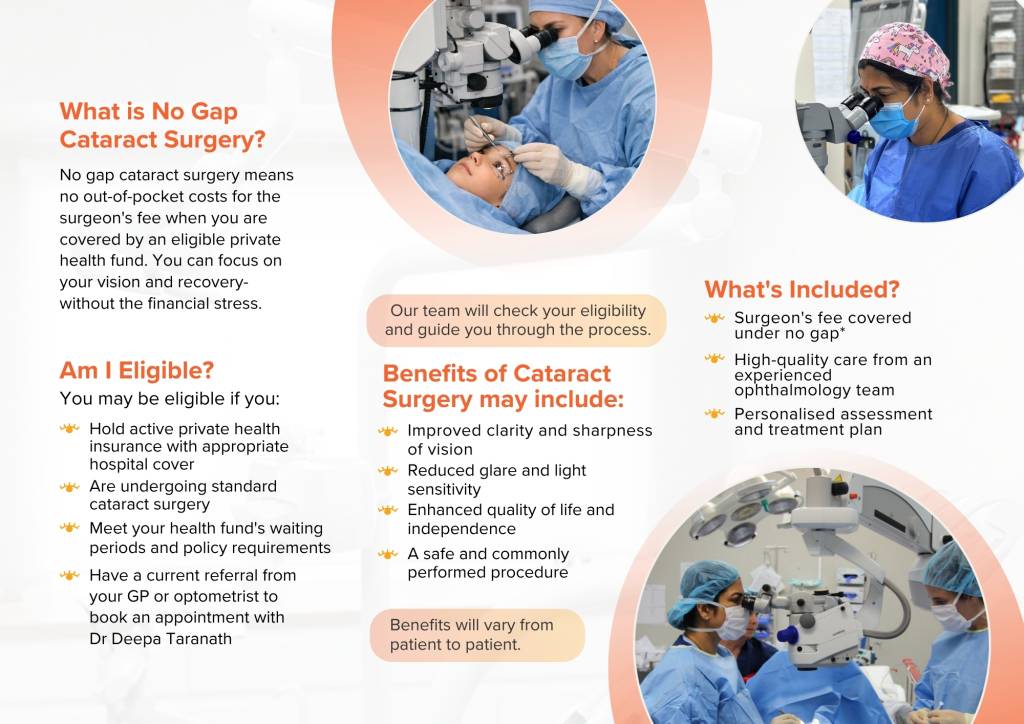
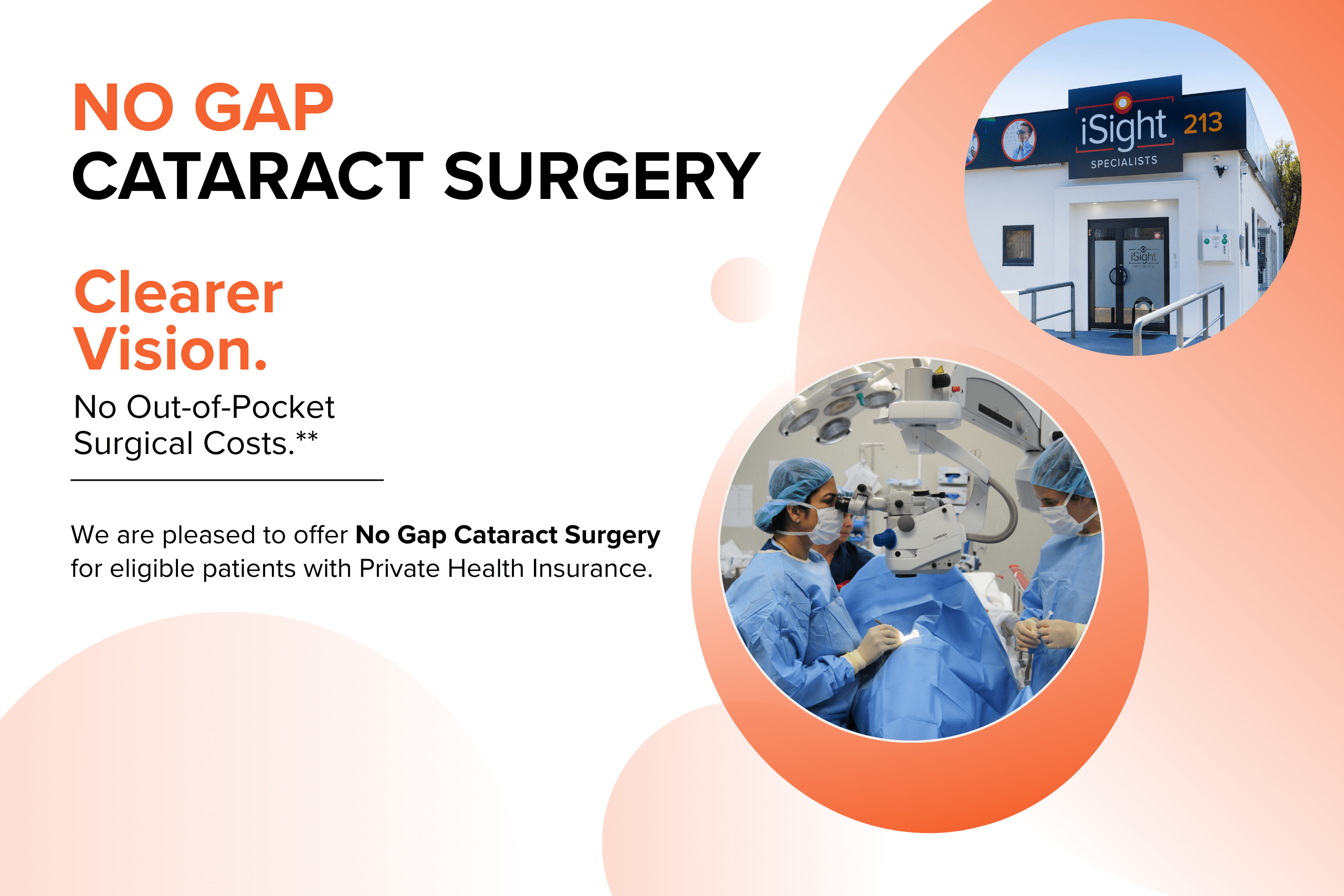
Cataract surgery is one of the safest and most common surgeries worldwide. It is performed as a day procedure under local anaesthesia and sedation. Dr Taranath operates from several day surgeries so we will be able to find a convenient option for you. Surgery takes about 20 minutes. However, you will usually be at the day hospital for 2-2.5 hours. The procedure involves removing the cloudy lens in pieces using a method called phacoemulsification. Then, a clear artificial intraocular lens (IOL) is implanted in its place. A patch will be placed over your operated eye until you are reviewed the next day.
Intraocular lenses
At your initial consultation we will conduct measurements of your eyes to help calculate which IOL will be best suited for your eyes and lifestyle. Dr Taranath will discuss the lens options with you. Options may include:
- Monofocal lens: corrects vision for one distance (near or far) and you will usually require glasses for some distances
- Multifocal lens: allows for focus at multiple distances, reducing the dependence on glasses. However, may results in symptoms of glare and haoles around lights
Extended Depth of Focus (EDOF): allows for a range of focus at different distances with few visual disturbances.
Recovery
The day after your procedure you will attend iSight Specialists for a review, where your eye patch will be removed and your post-operative instructions will be provided. Most people will notice an improvement in vision at this appointment and your vision will continue to improve as your eye heals. It can take 4-6 weeks for your vision to be at its optimal. You will be provided with antibiotic and anti-inflammatory eye drops to use for four weeks after your procedure.
We recommend you do not purchase any glasses until you have your final check up with us four weeks after both eyes have been operated on as your vision may fluctuate throughout this period.