

Collaboration is Key
Build Stronger Eye Health Together: Optometrists at iSight Specialists – Collaborate, Refer, Thrive.
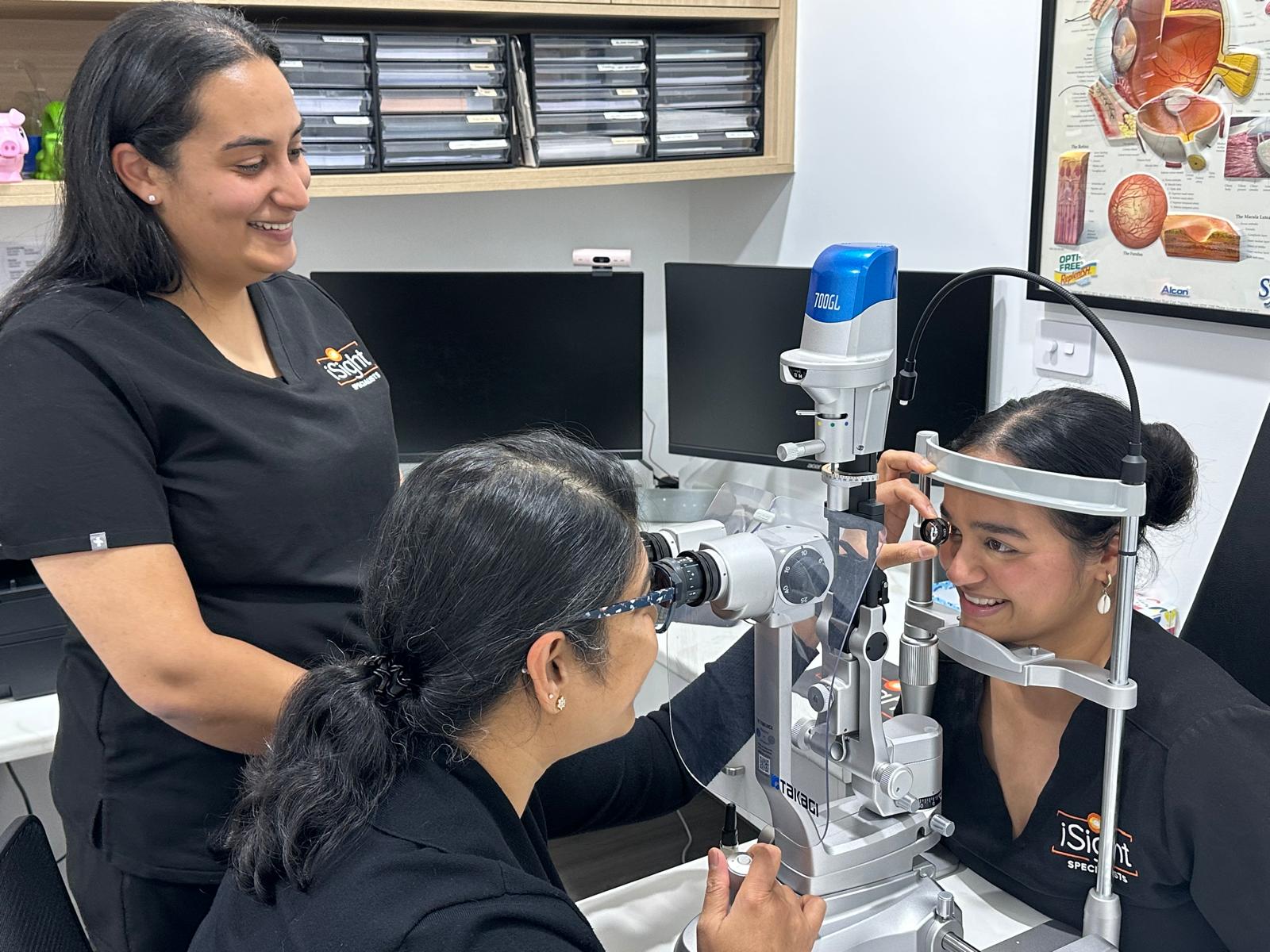
Who Are Optometrists and What Is Their Role?
Optometrists are primary eye care professionals in Australia who are at the heart of community eye care. They are trained to diagnose vision problems, prescribe glasses or contact lenses, and detect early signs of eye diseases like glaucoma or cataracts. They conduct comprehensive eye exams, manage common conditions, and refer patients needing specialist treatment to ophthalmologists. Unlike ophthalmologists, who are medical doctors handling surgery, optometrists focus on routine vision care and initial disease screening.
Collective Impact on Eye Care
At our practice, we believe that strong partnerships with optometrists are essential to delivering the highest standard of patient care. As primary eye care providers, optometrists play a vital role in early detection, ongoing monitoring, and continuity of care. Our ophthalmology team works alongside you to support the management of complex and subspecialty eye conditions, including paediatric ophthalmology, cataract, glaucoma, and retinal disease. We are committed to a collaborative model of care—providing timely access to specialist assessment, advanced diagnostics, and surgical expertise, while ensuring your patients are returned to you for their ongoing eye care needs.
Building an Optometrist Community
We understand that clear communication and responsiveness are key to effective co-management. Our team prioritises prompt, structured reports following every consultation, and we are always available for direct discussion regarding referrals, second opinions, or urgent cases. We aim to make the referral process simple and efficient, with streamlined pathways for both routine and urgent appointments. Just as importantly, we value the trusted relationships you have built with your patients and are dedicated to supporting—not replacing—that connection. Through shared care, education, and open communication, we strive to build lasting partnerships with optometrists that ultimately lead to better outcomes for our patients.
Optometrists can initiate referrals to iSight.au by providing a written, signed, and dated letter detailing the patient’s condition, recent exam findings, and rationale for specialist input.
Simple Referral Steps
- Assess and Document: Perform a comprehensive eye exam, noting visual acuity, refraction, IOP, visual fields, and symptoms within the last 3 months.
- Write Referral: Include patient details, clinical history, exam results, and specific concerns (e.g., suspected glaucoma or strabismus); specify duration if not the standard 12 months.
- Send to iSight: Fax, email, or use digital platforms to our clinic; patients then call (08) 7089 8355 with the referral for triage and booking.

Key Benefits and Requirements
Referrals ensure Medicare rebates and prioritize urgent cases for our services in paediatric ophthalmology, strabismus, cataracts, and general care. Optometrist referrals are valid for 12 months; include recent reports for faster processing. This process supports seamless shared care, with iSight providing follow-up reports back to you.
Frequently Asked Questions for Optometrists
Clear communication and collaborative care are central to how we work with referring optometrists. Below are answers to common referral questions.
Referring a patient is straightforward. Please provide a written, signed, and dated referral letter outlining the patient’s condition, relevant clinical findings, and the reason specialist input is required. Referrals can be sent to our clinic by fax, email, or approved digital referral platforms.
To help us triage efficiently, please include the patient’s details, clinical history, recent examination findings, and your specific concerns. Useful information may include visual acuity, refraction, intraocular pressure, visual fields, symptoms, and any suspected condition such as glaucoma or strabismus.
Where possible, please include findings from a comprehensive eye examination performed within the last 3 months. Recent clinical information helps support timely assessment and smoother triage.
Optometrist referrals are generally valid for 12 months, unless a different duration is specified in the referral. Including the intended referral period can help avoid delays in patient care.
Our ophthalmology team supports the management of a range of complex and subspeciality eye conditions, including paediatric ophthalmology, cataracts, glaucoma, retinal disease, strabismus, and general ophthalmic care. We work alongside optometrists to provide specialist assessment, advanced diagnostics, and surgical expertise where needed.
Yes. We provide streamlined pathways for both routine and urgent referrals. If a patient requires prompt specialist attention, clear referral information helps us prioritise appropriately and coordinate care as efficiently as possible.
Yes. We value the trusted relationships optometrists build with their patients. Our model of care is designed to support—not replace—that connection, with patients returned to their referring optometrist for ongoing eye care when appropriate.
Yes. We prioritise prompt, structured communication following each consultation. Referring optometrists receive follow-up reports to support continuity of care and informed co-management.
Yes. Referrals help ensure Medicare rebate eligibility where applicable and also assist us in prioritising urgent cases appropriately. Including complete and current referral information supports more efficient processing.
Our team is available to support referrals, second opinions, and urgent case discussions. Referrals may be sent by fax, email, or digital platform, and patients can call (08) 7089 8355 once the referral has been sent for triage and booking.