As parents, ensuring your child’s overall health and well-being is a top priority. Regular check-ups primarily concentrate on physical health. Vision care receives insufficient attention, but it plays a vital role in early development and learning achievement. Eye conditions in children can sometimes go unnoticed because young children may not always express or realise they have a vision problem.
Understanding common childhood eye conditions like amblyopia, strabismus, and others can help you identify early signs and seek timely treatment, which can make a significant difference in your child’s vision outcomes and quality of life.
1. Amblyopia (Lazy Eye)
Amblyopia, which doctors refer to as “lazy eye,” represents a leading reason why children develop vision difficulties. It occurs when one eye develops poor vision because the eye and the brain are not working well together. The brain starts favouring one eye, often the stronger one, which leads the weaker eye to become “lazy.”
Signs to watch for:
- One eye may appear to wander inward or outward.
- Your child may have difficulty seeing clearly with one eye.
- Squinting or shutting one eye to see better.
- Poor depth perception or trouble focusing.
Why early detection matters:
Amblyopia will result in permanent vision impairment of the affected eye when left without treatment. The brain remains flexible during early childhood, so treatment produces its best results at this stage. Patching the stronger eye or using eye drops to temporarily blur vision in the good eye helps the weaker eye improve.
2. Strabismus (Crossed or Wandering Eyes)
Strabismus causes the eyes to stop maintaining their normal alignment with each other. The eyes may have one normal direction while the other eye deviates in any direction, including inward or outward, or upward or downward. The eyes fail to align properly, which leads to double vision and depth perception problems.
Signs to watch for:
- Eyes that don’t look in the same direction.
- Tilting or turning the head to see better.
- Squinting or closing one eye in bright light.
- Frequent eye rubbing or headaches.
Why early detection matters:
Strabismus can lead to amblyopia if untreated, since the brain may ignore signals from the misaligned eye. Treatment options include glasses, eye exercises, patching, or, in some cases, surgery to realign the eyes. Early intervention increases the chances of normal vision development.
3. Other common childhood eye conditions
Refractive Errors (Near-sightedness, Farsightedness, Astigmatism):
The shape of the eye creates a problem with light focusing on the retina, which results in blurry vision. Children who have these vision problems will squint at things, position themselves near screens, and experience headaches.
Congenital Cataracts:
Cataracts that appear at birth will create lens clouding, which results in vision problems. The process of early detection combined with surgical treatment functions as a vital method to prevent vision loss.
Conjunctivitis (Pink Eye):
This common eye infection causes redness, itching, and discharge in one or both eyes. The condition spreads easily, but doctors can treat it effectively.
Importance of early eye exams
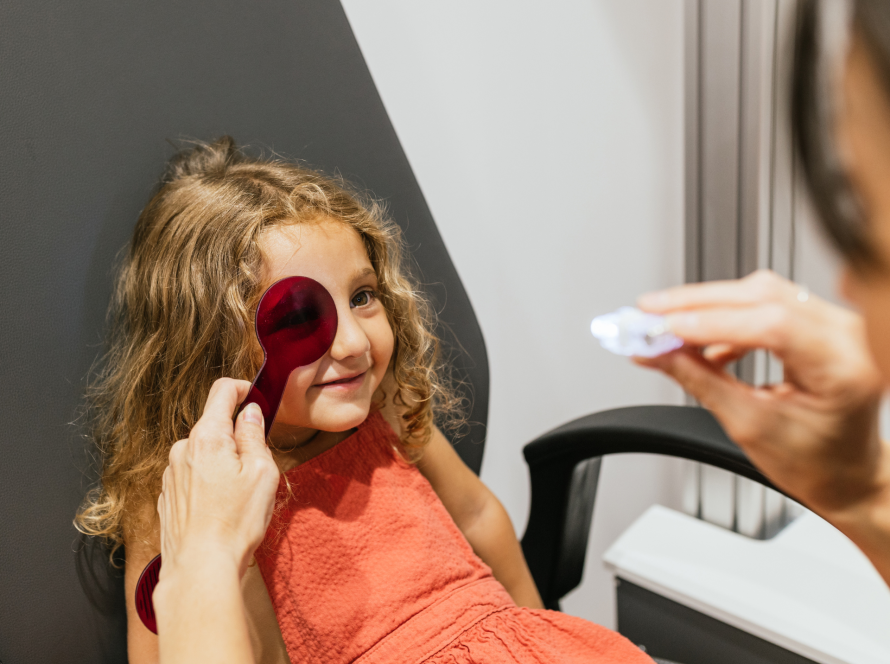
Since young children may not vocalise vision challenges, it’s essential to schedule regular eye exams starting in infancy and continuing through childhood. Basic screenings are performed by Paediatric Ophthalmologists, but a complete eye examination by an optometrist or ophthalmologist will identify early signs of problems.
Family history knowledge stands as a basic requirement for everyone. Many eye conditions can be hereditary, so if you or other family members have eye issues like amblyopia or strabismus, your child might be at higher risk.
How parents can support healthy vision
- Monitor your child’s behaviour: Look for signs such as difficulty reading, covering one eye, or frequent headaches.
- Young eyes experience strain when children spend too much time in front of screens, so parents should establish screen-free intervals and outdoor activities.
- Safety eyewear must be worn to protect their eyes during sports activities and outdoor events.
- Add vitamin A and omega-3 fatty acids in their diet to maintain eye health.
- The success of treatment depends on following through with prescribed glasses, patching, and eye drop therapy for children.
Childhood eye conditions like amblyopia and strabismus, while common, don’t have to negatively impact your child’s future vision. Early detection and treatment can prevent permanent vision loss and improve overall eye development. As a parent, being vigilant about your child’s eye health and ensuring timely screenings will help you catch any concerns before they become serious. Healthy vision lays the foundation for your child’s confidence and success, so regular eye care matters.
Book an Appointment with iSight Specialists
If any of the signs mentioned in this article sound like something your child is experiencing, or if it’s simply time for a routine eye check-up, don’t wait. Early detection is key to protecting your child’s vision and supporting their growth and development. At iSight Specialists, we offer expert, compassionate care tailored to children of all ages.
Book an appointment with us today and take the first step toward ensuring your child’s vision is on the right track. Our friendly, dedicated team is here to provide a comfortable and informative experience that makes eye exams a positive part of your child’s healthcare routine.
Contact us now to schedule your appointment — because your child’s vision matters, and so does their future
BOOK NOW