

Age-related Macula Degeneration
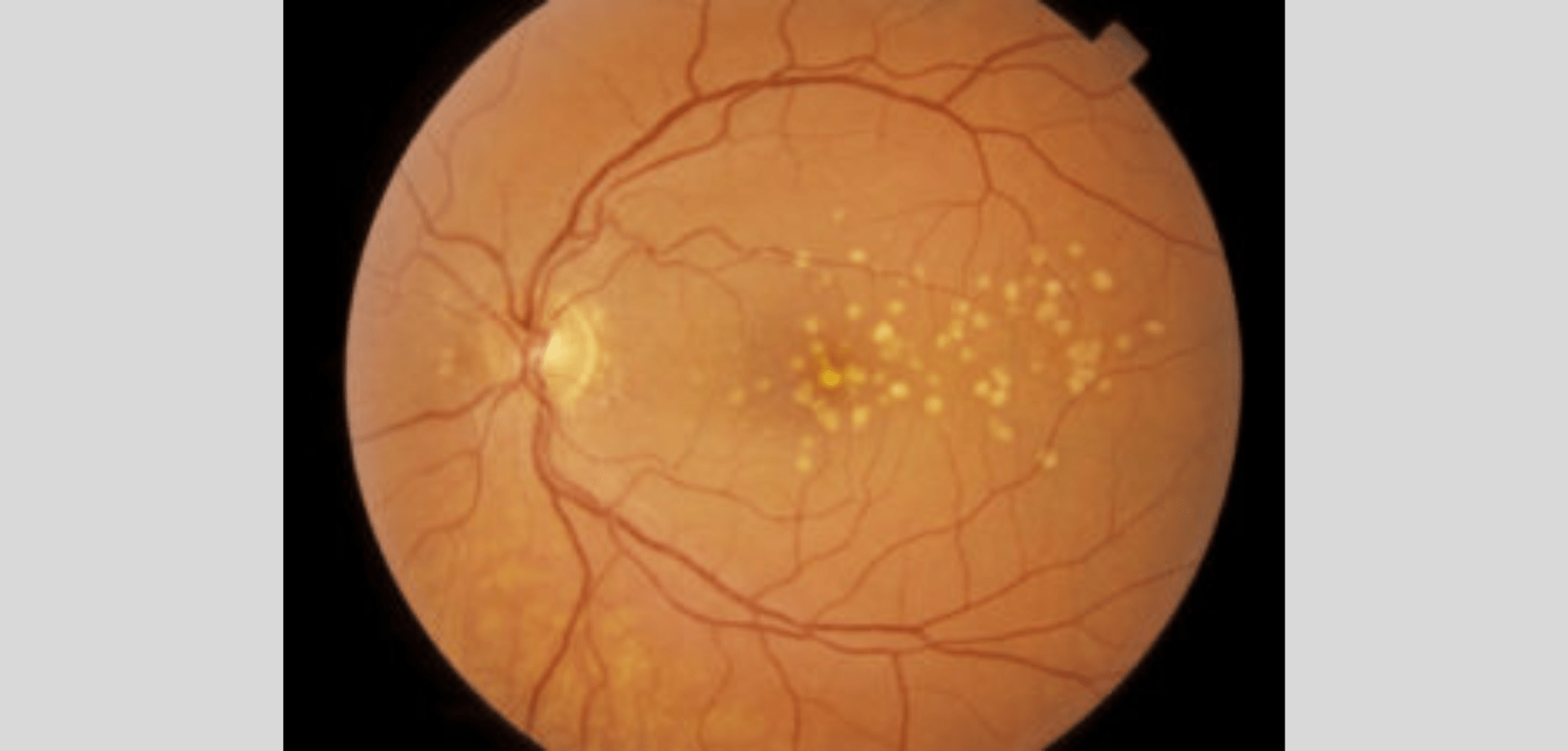
Macula degeneration is a condition that affects the macula which is the part of the eye that is responsible for clear central vision. Aged-related macula degeneration (AMD) mainly affects people over the age of 50.
Symptoms of AMD can vary but can include:
- Blurred or distorted central vision
- Difficulty reading
- Difficulty seeing fine details
- Struggling with certain lighting conditions or issues with glare
- Straight lines appearing wavy or distorted
- Missing areas or blank spots in centre of vision
Risk factors of AMD include age over 50, family history of AMD, smoking, diet low in antioxidants, long-term UV light exposure, high blood presssure and cardiovascular disease.
There are two types of AMD – Dry and Wet. Dry AMD is the most common form where the macula slowly thins due to build-up of waste products. The small areas of built-up waste-product is called drusen. This type of AMD is usually slowly progressive. Wet AMD occurs when abnormal leaky blood vessels grow at the macula. These blood vessels are very weak and will tend to leak fluid or blood resulting in more severe vision loss if not treated promptly.
Regular eye examination allows your optometrist or ophthalmologist to pick up any small changes to your macula even before symptoms appear. Examinations will include vision testing, amsler grid testing and dilated fundus examination. Optical Coherence Tomography (OCT) will also be performed which provides cross-sectional images of the retina allowing your eye professional the ability to detect very early structural changes.
While there is currently no cure for AMD, through early diagnosis, treatment aims to slow progression and protect vision for as long as possible. At iSight Specialists we will explain your specific case and provide management tailored to you. This can range from continuous monitoring, oral supplementation or intravitreal injections. In the early stages of AMD, the main course of action is to monitor for any changes and to adjust diet and lifestyle to decrease the rate of progression to later stages of AMD. For Intermediate AMD, supplementation based on AREDS2 research has been shown to be effective to reduce progression to advanced AMD by about 25%. Finally, in the advanced stage, the main course of treatment is intravitreal injections which aims to reduce the amount of fluid or blood that is produced by the leaky blood vessels.