

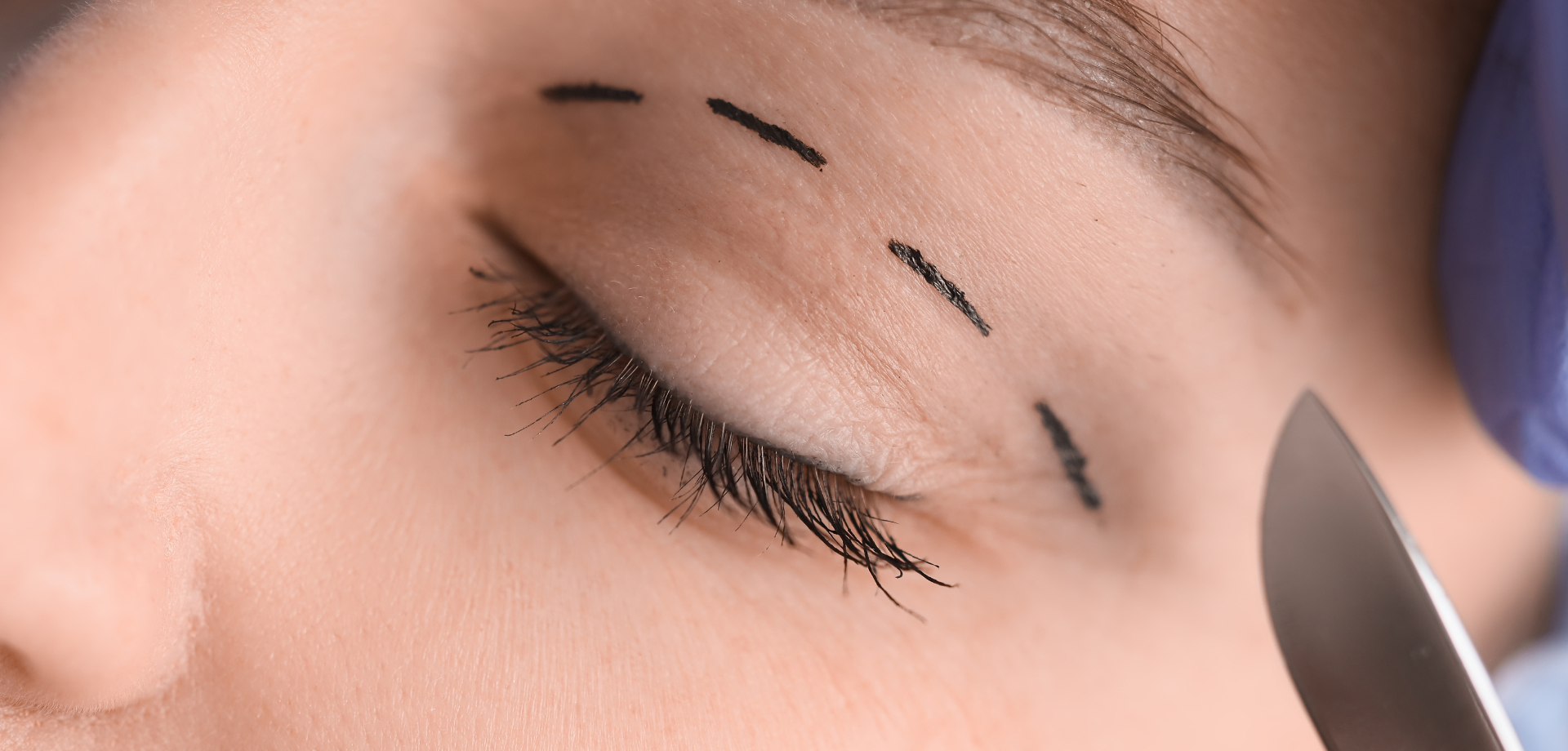
Blepharoplasty (eyelid surgery) is a procedure that improves function and appearance of the eyelids. It can be performed on the upper, lower or both eyelids. Blepharoplasty can be performed to improve vision that is affected by dropping eyelids or just for cosmetic purposes. The procedure involves repositioning or removing excess skin, muscle and fat around the eyes.
Indications for blepharoplasty surgery
- Dermatochalasis: loose, excess eyelid skin that can droop over the eye and reduce vision. This is common with aging
- Ptosis: upper eyelid drooping due to eyelid muscle weakness
- Visual field affected due to obstruction of droopy upper eyelids
- Discomfort or irritation from excess eyelid skin rubbing on the eye
- Eyelid asymmetry
- Entropion (lower eyelid turned inwards) or Ectropion (lower eyelid turned outwards
- Reconstructive purposes following trauma, injury and eyelid abnormalities from previous surgery
- Cosmetic reasons e.g. reducing droopy upper eyelids where visual field is unaffected, tightening loose eyelid skin, removing under-eye bags or puffiness
Blepharoplasty & Medicare Eligibility
Eyelid surgery may be eligible for a Medicare rebate only when it is performed for a medical/functional reason rather than for a cosmetic reason only. Eyelid surgery performed only for cosmetic reasons is not covered by Medicare.
Eyelid lesion excision
For eyelid lesions that do not resolve with medical treatment alone or are a cosmetic issue, we can perform the procedures under local anaesthetic in the clinic as an outpatient. For children or those who prefer to be under sedation or general anaesthetic, your procedure can be arranged at a day surgery hospital.
Commonly chalazions (styes) are removed. This is a short procedure. The eyelid is numbed to ensure comfort and then a small incision in made usually on the inside of the eyelid so there is no scar. The contents of the chalazion are then removed. A pressure patch will be placed over the eye which you can remove once you arrive home. Antibiotic ointment will be prescribed for 5 days following the procedure to reduce any change of infection as the wound heals. After the procedure mild bruising and swelling, temporary tenderness or slight discharge may be experienced.