

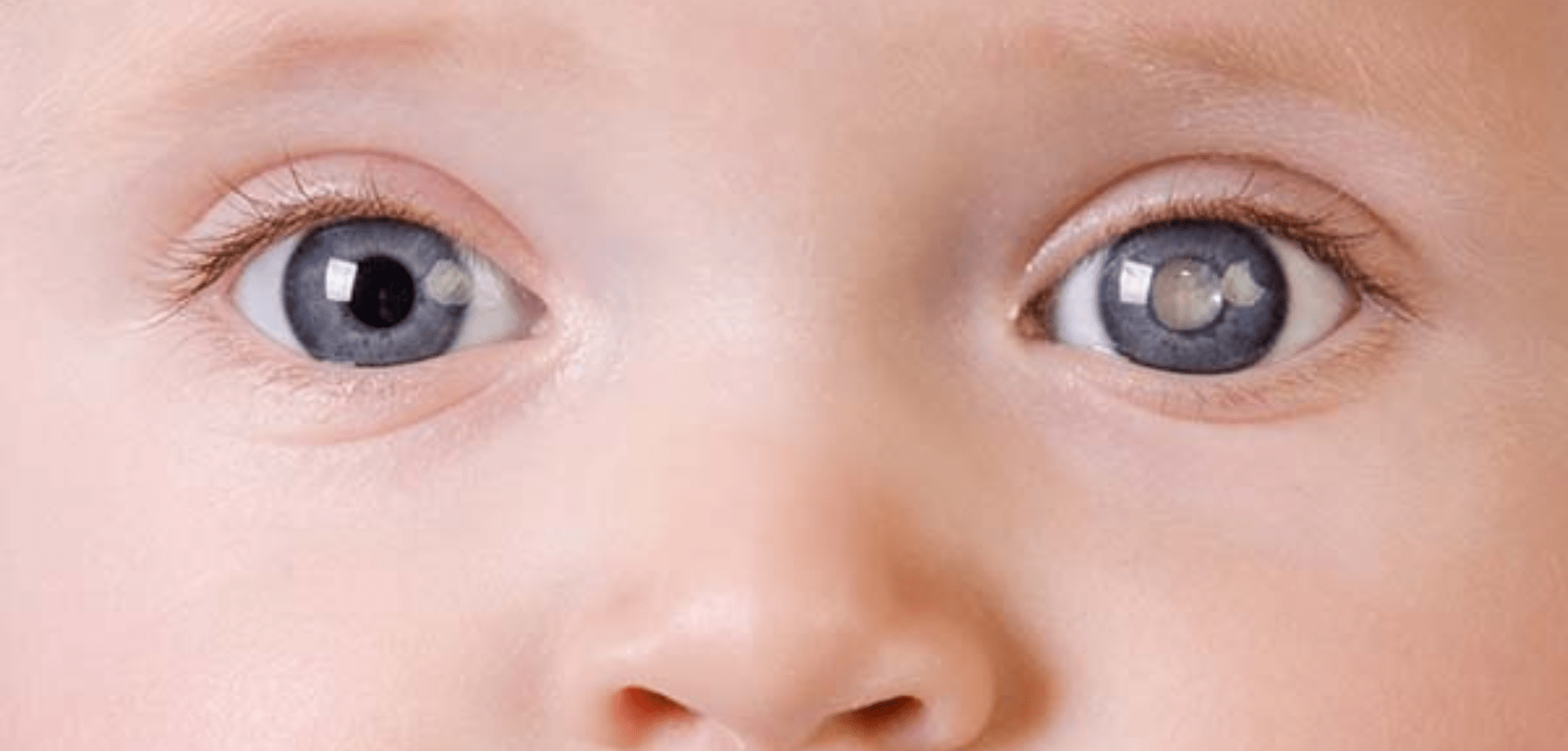
Cataracts occur when the natural lens in the eye becomes cloudy causing a reduction in vision. Cataracts in children may be congenital (from birth) or acquired later. Causes may include genetics, trauma, infection during pregnancy, or steroid use. Early detection is key for healthy vision development.
Children often do not realise themselves that they have poor vision as they assume that what they see is ‘normal’. If they have never experienced clear vision, they may not be able to realise or express that something is wrong.
Parents/guardians can look out for signs and symptoms such as a white/grey pupil, lazy or turned eye, eye movement issues, sensitivity to light, difficulty focusing. If any of these signs are noted, your child should have their eyes checked no matter how young they are. The first few months to years of life are crucial for appropriate visual development. Cataracts, if left untreated can cause permanent vision loss due to amblyopia where they neural connection from the eye to the brain is not appropriately formed.
The decision to remove cataracts in children will be made by an ophthalmologist. Factors such as the child’s age and whether the cataract is within the visual axis or if there is a measurable reduction in vision will be taken into consideration. If vision appears to be unaffected or the cataract is not central, surgery may be delayed. The aim is to remove the cataract at an appropriate time to give the child the best chance at developing normal vision.
Following paediatric cataract surgery, regular follow up will be required as children will need some type of refractive correction as their eye continues to grow. Patching therapy may also be required.